Most people insure against the things they fear. They just don’t do it for their biggest fear.
Think about home insurance.
The average UK household pays somewhere between £350 and £460 a year to protect against fire, theft, and structural damage.
That’s a few hundred pounds annually, every year, against risks that are—statistically—quite low. The probability of your house burning down in any given year is roughly 0.02%.
The probability of a burglary is higher, but still well under 5% for most areas. People pay for this protection without much deliberation because the potential loss feels too large to leave unmanaged.
Now consider public speaking.
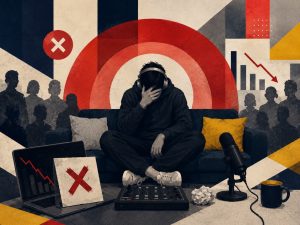
Surveys consistently rank it as the number one fear in the general population—above serious illness, above financial ruin, and yes, above death.
Yet when it comes to addressing that fear, most people’s strategy is avoidance. No coaching. No training. No graduated exposure.
They just hope the next presentation goes better than the last one, or find reasons to decline opportunities that require it.
People invest monthly to protect against a 0.02% risk, and invest nothing to address a fear that affects their professional life constantly, with measurable and compounding financial consequences.
What public speaking avoidance actually costs you
The costs of unaddressed public speaking anxiety show up in specific, quantifiable places across a career.
Salary negotiations
Negotiating confidently and articulately is a public speaking event. It requires you to make a case, hold a position under pressure, and respond to pushback without folding.
People who can’t do this leave money on the table every time. A single successful salary negotiation might add £5,000 to £10,000 to your annual package.
Over a decade, assuming even modest progression and one renegotiation every two years, the cumulative difference between someone who negotiates effectively and someone who accepts whatever they’re offered runs to tens of thousands of pounds.
Promotions
Visibility drives advancement in most organisations. But the people who get promoted aren’t always the most technically capable.
Often, they’re simply the ones leadership can picture presenting in front of a client, a board, or a large team. If public speaking anxiety keeps you out of those rooms, it keeps you off that leadership shortlist.
Lost pitches and business opportunities
For entrepreneurs and freelancers, the ability to pitch clearly and compellingly is directly tied to revenue.
A stumbled pitch, hesitant proposal, or presentation that undersells a strong idea all have an immediate financial consequence.
You don’t get a second chance to make a first impression in a competitive pitch environment.
Everyday advocacy
Beyond formal presentations, public speaking anxiety costs people in smaller but cumulative ways:
- staying quiet in meetings when they have a relevant point
- accepting unfair treatment because confronting it feels too exposing
- deferring to louder colleagues rather than pushing back
You won’t see these costs on a spreadsheet, but they compound into a professional identity that others learn to underestimate.
The maths behind public speaking anxiety
Take the salary negotiation example alone.
If you could negotiate £5,000 to £10,000 more per year—and research suggests confident, articulate negotiators routinely do—the midpoint of that is £7,500 annually.
Over a decade, that’s £75,000 in additional earnings from a single skill improvement.
| Risk | Annual cost to protect against it | Probability of loss | Potential loss |
| House fire or theft | £350-£460 (home insurance) | ~0.02-5% depending on risk | Replacement value of home and contents |
| Public speaking avoidance | £0 (most people invest nothing) | Near-certain across a career | £50,000-£100,000+ in lost earnings |
Home insurance is rational. The maths justify it even at low probability because the downside is catastrophic.
But the maths for public speaking development are even more compelling—because the probability of the loss isn’t low.
If you avoid developing your public speaking skills, the career cost is near-certain.
It’s not a question of whether avoidance costs you. It’s a question of how much, and over how long.
What addressing your fear of public speaking actually costs
A structured coaching programme with an experienced coach runs to a few hundred pounds. A half-day workshop for a team costs a fraction of one lost pitch.
Six weeks of online coaching—the kind that builds lasting, progressive improvement rather than a one-off confidence boost—costs less per year than insuring your sofa.
The return on that investment, measured in salary negotiations alone, pays for itself in the first conversation where you hold your position and walk away with more than you’d have accepted before.
Everything else—the clearer presentations, the more persuasive pitches, the professional credibility that comes from speaking with confidence—adds on top of that.
Public speaking anxiety is common. Leaving it unaddressed is a financial decision, whether you’ve framed it that way or not.
And it’s one of the more expensive decisions most professionals make without realising they’re making it at all.
If you’d like to start addressing your public speaking, you can find out what structured coaching looks like at themotalkshow.com/coaching.

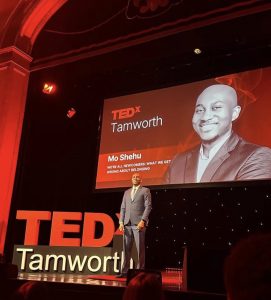
Three-time TEDx speaker, broadcast presenter, and founder of The Mo Talk Show. Mo trains individuals and teams to speak with greater clarity, confidence, and impact—and writes about public speaking, performance anxiety, and communication.